

Nobledark Reflections
Updated: Jul 22
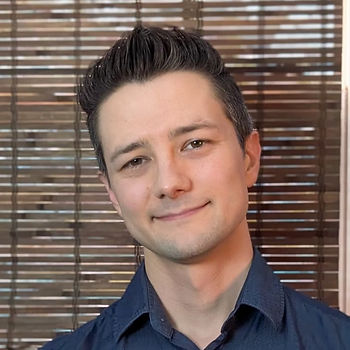
1) What is your Author name; use your Pen name if you have one.
Michael Vadney
2) What is your genre and what drew you to it?
I write nobledark fantasy, a subgenre that blends the harsh, morally complex worlds of grimdark with the hope and heroism of traditional epic fantasy. What drew me to it is how deeply it reflects my own worldview.
I think a lot of people look at the world and feel overwhelmed by the constant cycle of conflict, corruption, and tragedy. It’s easy to feel powerless in the face of problems that seem far bigger than any one person. But I also believe that individuals still have the power to make meaningful choices. Whether that means changing their circumstances, protecting the people around them, or simply choosing compassion and perseverance in difficult times.
That’s what nobledark fantasy represents to me. The world may be dark, but the characters refuse to let that darkness define them. Their heroism matters precisely because the odds are against them. In both fiction and real life, I’m drawn to stories where hope isn’t naive, it’s an act of courage.
3) Which character of yours is your favorite and why?
I can’t choose between my three POV characters, so please don’t make me pick between my children. Outside of them, though, I would probably say Heraldur is my favorite. He’s a crime boss operating in the city of Burunt, and he was an absolute joy to write because of how distinct his personality and presence became on the page.
A lot of his foundation was inspired by Silco from Arcane, particularly that mix of charisma, intelligence, and quiet menace. But as I wrote him, Heraldur evolved into his own character with his own moral code and motivations. He serves as an antagonist, mentor, and foil to one of the main characters all at once, which made every interaction with him layered and unpredictable.
What I enjoyed most was exploring the gray areas within his character. He’s capable of cruelty and manipulation, but also wisdom, loyalty, and genuine care in his own complicated way. Balancing those shades of black and white made him one of the most fascinating characters in the story for me to work with.
4) Which character of yours was the most challenging to write and why?
Easily the primary antagonist, Viceroy Gian Magnus. He was the most difficult character for me to write because, early on, I struggled to truly understand him beyond the surface level. At first, I found myself slipping into the trap of writing him like a classic over-the-top villain, someone who reveled in cruelty and practically cackled at his own triumphs. It never felt authentic or believable to me.
A big turning point came through conversations with my editor, who pushed me to dig deeper into who Gian was as a person and what genuinely motivated him. Once I stopped viewing him as “the villain” and started viewing him as someone who believed he was justified in his actions, the character finally clicked into place.
What emerged was a much more nuanced antagonist. Gian has ambitions, fears, and ideals. Even when readers disagree with his actions, I wanted them to understand how he became the person he is. One reviewer captured that perfectly when they said, “I was satisfied to see that the villain was not one dimensional. They had their own motivations, their own desires, which later turned into dangerous obsessions.”
For me, that complexity is what makes a villain memorable. The most frightening antagonists are often the ones who can still make you understand them.

5) Do you prefer writing dialogue, action or other scenes?
Dialogue is probably the easiest thing for me to write. I love exploring character dynamics, conflicting perspectives, and those quieter conversations where personalities really come alive. Some of my favorite moments in storytelling are when characters challenge each other philosophically or emotionally, so dialogue tends to flow very naturally for me.
That said, action scenes are my favorite to write. I’m a very visual thinker, so I can usually picture combat, movement, and cinematic moments very clearly in my head. Writing action feels almost like directing a scene in a film, balancing tension, pacing, and imagery to create something exciting and immersive.
The area I had to work the hardest on was scene description and environmental detail. Early on, I realized I had a tendency to focus so heavily on characters and momentum that I sometimes forgot to fully ground readers in the setting. I had to consciously develop that skill so the world felt alive instead of like characters talking and fighting in an empty white void.
I think those preferences ultimately shaped the style of my writing. My books tend to be fast-paced and action-oriented, but they’re also driven by character conversations, introspection, and ideological debates that give emotional weight to everything happening around them.
6) How did you come up with your cover design?
I was very fortunate to work with Katerina Belikova for my covert art and Adrian M Gibson for book design. Working with them both was a joy and once I wrote up a design document with the general direction and inspiration I was wanted the cover to export they both ran with it, requiring very little continued input from me. For the initial idea I took inspiration from two of my favorite covers, The Emperors Blades for character positioning and The Last Mortal Bonds for emotional weight and style. Both are from Brian Staveley’s Unhewn Throne Trilogy.
7) What is your favorite part about being a writer?
My favorite part about being a writer is, very simply, writing. That’s the core of why I started in the first place. I’ve always had an almost constant stream of stories running through my mind. It doesn’t feel like something I have to force so much as something I have to occasionally step away from when life demands focus elsewhere.
Whether I’m working on a novel, a short story, or something more collaborative like a D&D campaign, I just genuinely love storytelling. Even if I were not a novelist, I suspect I would still find some outlet for these kinds of adventures and ideas.
A close second, though, is the community that comes with it. I really enjoy interacting with other authors, readers, and people in the broader book world. I love digging into the craft itself and talking about questions like what makes a story work, what makes it fall flat, how character arcs land effectively, and how a well-executed twist actually pays off.
For me, it’s just as rewarding to explore the mechanics of storytelling as it is to create the stories themselves.
8) Who did you dedicate your first book to and why?
I dedicated Crownfall, my debut novel, to my wife because I would not be the person I am today without her.
For a long time, I felt lost in terms of who I was and what I wanted to do with my life. I moved through different careers, jobs, and phases trying to figure out what kind of person I wanted to become. Through all of that uncertainty, she remained a constant presence in my life. She supported me through some of my lowest mental points, helped me navigate difficult seasons, and showed me what it means to live with purpose.
She also taught me what it looks like to pursue a goal with real discipline. That combination of encouragement and honest, sometimes difficult guidance was exactly what I needed. It helped me shift from drifting through possibilities to actively building toward something meaningful.
A lot of people today comment on how driven I am, whether as an author or a podcaster. When I look at those traits, I can trace them directly back to her influence and the lessons she gave me.
As the dedication says, she set the pace until I learned how to run on my own.
9) Which book villain would be the hardest to defeat?
Brona, the Warlock Lord from The Sword of Shannara by Terry Brooks, is probably the hardest book villain to defeat in my view.
What makes Brona so compelling is that defeating him is not just a matter of strength or strategy. To overcome him, a hero must use the Sword of Shannara to confront an unfiltered truth about themselves and then turn that same truth-revealing force back on him. That means the battle is as much internal as it is external.
And that is what makes him so difficult. Confronting your own truth, who you are beneath fear, ego, and the roles you play in everyday life, is something most people struggle with. It requires a level of self-honesty that is far harder than any physical confrontation.
In that sense, Brona is not just a dark lord to be defeated, but a catalyst for self-reckoning. To challenge him is to challenge your own identity, and that is a fight most characters, and most people, are not fully prepared to win.
10) Name one book that you have reread several times.
The book that I've reread the most times would be The Spearwielder's Tale by R.A. Salvatore. I still have my original omnibus copy of it. I must have read that trilogy of books somewhere between six and ten times.
I have many fond memories of reading it on my lunch break during my summer job working as a mechanic's assistant and a junkyard monkey. The pages themselves are covered in oil stains, and the binding itself has seen many better days.
My tastes have since moved away from that type of fantasy, but I still look back on that tale, and that book in particular, very fondly.
11) Do you prefer to read series or independent novels?
I like to bounce back and forth between both, honestly.
There is a certain type of character and plot arc that really only works in a series, especially longer ones. I love the slow build of watching a character evolve over the course of multiple books, and there is a unique kind of payoff when storylines that have been developing over two, three, seven, or even more books finally converge in a satisfying way.
At the same time, long series can also become demanding to keep track of, especially when the scope gets really large. Sometimes it is refreshing to step away from that continuity and read a standalone novel that tells a complete, self-contained story in one experience.
For example, I really enjoy The Wheel of Time by Robert Jordan and later completed by Brandon Sanderson. It is exactly the kind of expansive, long-form storytelling that only a series can deliver. On the other hand, I also really enjoyed Blood Over Bright Haven by M. L. Wang, which is a standalone that tells a complete and powerful story without needing anything beyond itself.
They are very different reading experiences, but I appreciate both for what they do best.
12) What is your favorite book that you have read this year?
While choosing an absolute favorite is difficult, one book I’ve read this year that really stands out is PolyCorpse by Jarrett Poole.
It’s one of those reads that stayed with me long after I finished it. The concept and execution are both incredibly compelling, and it handles its ideas with a level of confidence and originality that immediately drew me in. What I appreciated most was how engaged I felt throughout the entire experience, constantly wanting to see where it would go next and how everything would come together.
So while I wouldn’t say it’s easy to crown a single “favorite” book of the year, PolyCorpse is definitely one of the most memorable and impactful reads I’ve had this year.
13) In your opinion, can a book series be too long?
Absolutely, a series can definitely be too long.
I would even say that The Wheel of Time is a good example of that for me. I love the series overall, but there are stretches where certain plotlines feel like they take more steps than necessary to reach their payoff. It occasionally slows the momentum in ways that feel like they could have been tightened without losing what makes the story great.
That said, I still have a lot of respect for what Robert Jordan built, and for how Brandon Sanderson was able to bring it to a satisfying conclusion. It is a series I admire even while also feeling that it would have been even stronger if it were a bit more condensed.
So for me, length is not inherently a problem, but there is definitely a point where more becomes less if it starts to dilute pacing or focus.

14) What is the name of your book/series? Tell me a little bit about them.
My debut novel is called Crownfall. It's a nobledark fantasy about a noble, a thief, and a magical engineer as they are radicalized against the viceroy of their nation.
15) Do you have a website? If so, what is it?
Yes, I do. It’s michaelvadney.com, where US readers can order signed paperback and hardcover copies of Crownfall.
16) Where can we find and follow you? (Name your social media platforms.)
I’m most active on X and Instagram, but you can find me on all the socials as michael_vadney
17) If there anything important that you would want my readers to know about you?
I just wanted to thank everyone for reading this article and expressing interest in my life and journey. Crownfall is a dream made real and no matter what happens with it I’m incredibly satisfied that it exists. Thank you all and happy reading.


Comments